Esprit de Corpse: A Punk Memoir in Power Chords
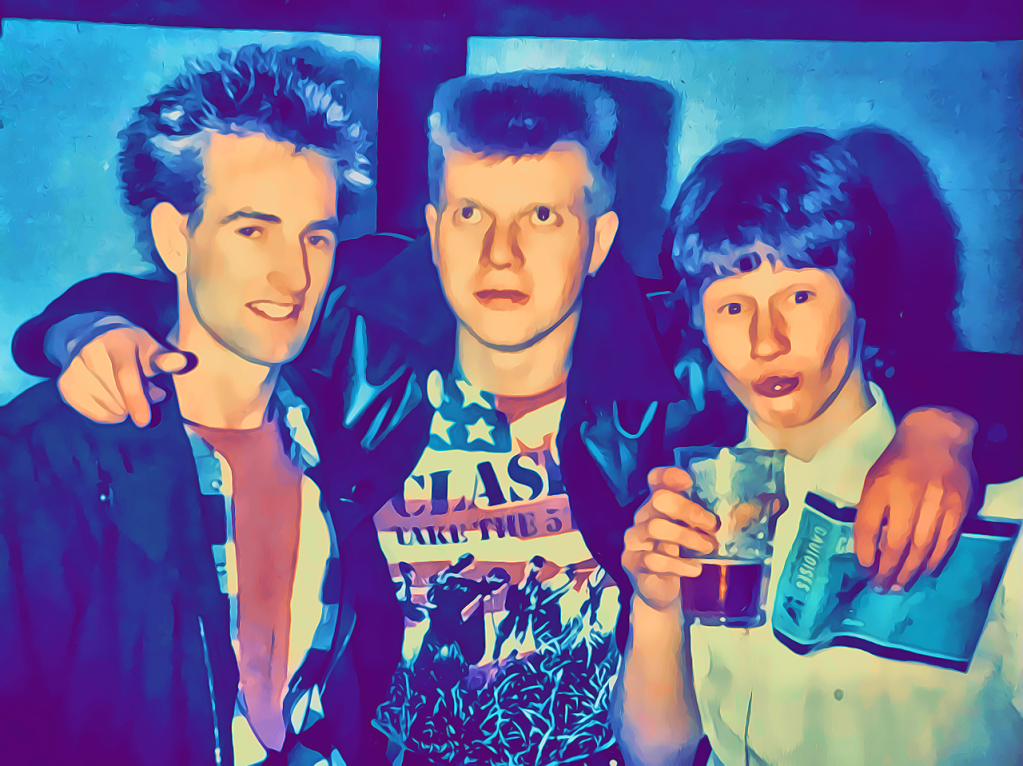
Welcome to the mothership of mayhem. This is the (mostly) true story of Esprit de Corpse — the teenage punk band that almost shook Mid Sussex to its foundations. Here you’ll find the full saga: gory gig tales, chaotic recordings, heroic hairstyles, and more self-mythologising than anyone strictly asked for. Click around, dig deep, and discover how a group of kids with instruments, attitude, and a total lack of adult supervision became the legends they always claimed to be.
- The History: From First Riff to Final Wail
- The Corpses: Meet the Band Members
- Discography: The Records That Never Were
- Live Rot: Gigs, Posters & Live Reviews
- The Tomb: The Scrapbook of Doom
The Full Story: From First Riff to Final Wail
“This began life as a newsletter article I penned in 1984 – when I was the bass-wielding historian of doom and self-appointed scribe of Esprit de Corpse. Originally handed out at gigs and scrawled on a prehistoric typewriter, it may have evolved slightly over time.”
– Dave The Punk
The Rise, Fall, and Resurrection of Esprit de Corpse
It all started in the anarchic crucible of 1981, when a bold young visionary named Luke declared himself lead guitarist of a band that didn’t yet exist. Soon after, Steve joined on vocals — armed with lungs full of rage and a red beret that screamed ‘Power to the People! — and Gary came aboard on rhythm guitar, bringing distortion, dedication, and his Atari games console.
By January 1982, I’d been drafted in on bass, presumably for my brooding intensity and ability to count to four repeatedly. Paul completed the line-up on drums. And just like that, Esprit de Corpse lurched into life.
Birth of the Noise
We cut our teeth on early anthems like Holocaust, Oral Sects, Repulsion Rock, and Party Games — tunes that weren’t so much played as unleashed. After months of relentless rehearsal and industrial quantities of beans on toast, our sound began to evolve. Dance of Consecration, Desensitized, and the fan favourite P.N.E.U. soon emerged, proof that beneath the chaos lay a weird kind of craft.
Then came our first gig — September 1982 at Haywards Heath College’s Electric Evening. A riot of eyeliner, sweat, and distorted chords, it went down surprisingly well. Offers flooded in (well, trickled), including an invite to play a party in Hassocks. That gig featured guest drummer Andy aka “Lippy” — now of Blue Vein fame — and while the music was enthusiastic, let’s just say our collective blood-alcohol level may have interfered with peak performance.
Filth, Violence, and a Hospital Visit

For our October ’82 gig at King Edward Hall, we added new material: Land of Filth and Money, To Know the Unknown, and Never Say Die. Little did we know that Lindfield — our next stop — would be the site of punk folklore. It started as a gig… and ended as a riot. Fights broke out mid-set, fans got clobbered, and I ended the night with a trip to hospital. Rock ’n’ roll, baby.
In the aftermath, Luke exited the band and we hit pause.
Resurrection and Reinvention
But you can’t kill what’s already dead. Esprit de Corpse reformed minus Luke, and we ceremoniously buried Blackest Hours — a song so bad it should’ve come with a government health warning. In its place, we unleashed our own bastardised cover of The Clash’s Garageland, rewritten as Gary’s Band in honour of our newly self-appointed leader. It was part tribute, part piss-take — and entirely louder than necessary.
1983 was our “lazy sabbatical” phase. We played our second Electric Evening in February, then Paul left the band. A creative hibernation followed, during which Steve penned three new tracks and refined Walk of Death to its current Mark III incarnation. Meanwhile, Gary and I retooled the old material and brewed up fresh filth.
By October ’83 we were back — our third Electric Evening saw Lippy return as guest drummer. Soon after, we recruited two permanent new members from a vast talent pool (okay, maybe three lads and someone’s cousin). Mark aka “Biff” took over on drums, and Andy aka “Chops” joined on rhythm guitar.
1984 and the Cult of Corpse
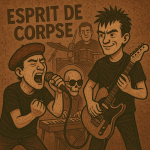
After a month of frenetic rehearsals, the newly risen Corpse debuted at The Golden Eagle, Haywards Heath, December ’83. The following year kicked off with an unforgettable gig at Brighton Tech with Moon Zero II. The sound was terrible, but we walked away with a cheque and a mention in the local press — what more could you want?
In January we were back at The Golden Eagle for Urrgh, It’s 1984, sharing the stage with Stone Cold and Blue Vein. Around this time we added our mysterious guest keyboardist, “Boney” who brought synth to Desensitized, Dance of Consecration, Walk of Death, and even doubled up on bass for Killing on a Sunday, adding extra depth and doom to the mix.
Boney made his live debut at Oakmeads Hall, Burgess Hill for the gloriously titled Why Not 1984?, playing alongside Blue Vein, Stone Cold, and Tokio Joe. It was our best gig yet — tight, raw, and undeniably ours.
Mythical Albums and Final Acts
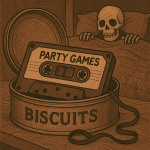
Later that year, in the second half of 1984, we allegedly released our debut album — Party Games. It was never stocked, charted, or even properly duplicated, but legend has it that a handful of warped cassettes exist, most of them rattling around inside old biscuit tins beneath teenage beds or quietly disintegrating in lofts across Mid Sussex. If you’ve got one, it’s probably worth absolutely nothing. But spiritually? Priceless.
By year’s end, Chops had left the band — crushed that 1984 didn’t come with dystopia, brainwashing, or any sign of Big Brother (unless you count our slightly bossy sound guy). Orwell had lied. Thatcher hadn’t. And Chops faded into the mist, muttering something about broken dreams and broken leads.
Undeterred, and still armed with more distortion than sense, we dragged our sorry amps back to The Golden Eagle in 1985 for a few last hurrahs. Then came our grand finale: the Third World – Food for Thought charity concert, where we shared the stage with Blue Vein, Stone Cold, and Black October. A righteous cause, a wild night — and it happened a whole two months before Live Aid. Coincidence? Maybe. But we like to think Bob Geldof was watching from the balcony, furiously taking notes.
Our final act? A posthumous EP, the 8-track Ultimate Challenge, released in late ’85 with all the fanfare of a fanzine in a bin. No promo, no airplay, no clue what we were doing — but every track was a defiant shout from beyond the grave. Because even in death, Esprit de Corpse refused to stay buried.
 Dave The Punk